
Spaceman Strategy Guide for 2026: Tips & Tactics
Reading time: 10 minutes
- Understand the mechanics of the Spaceman game and how to cash out effectively.
- Learn the benefits of using partial cashout and when to apply it.
- Master bankroll management techniques to protect your funds.
- Avoid common pitfalls that can lead to unnecessary losses.
- Practice with demo modes to sharpen your strategy without risk.
What Is Spaceman and Why Does It Stand Out?
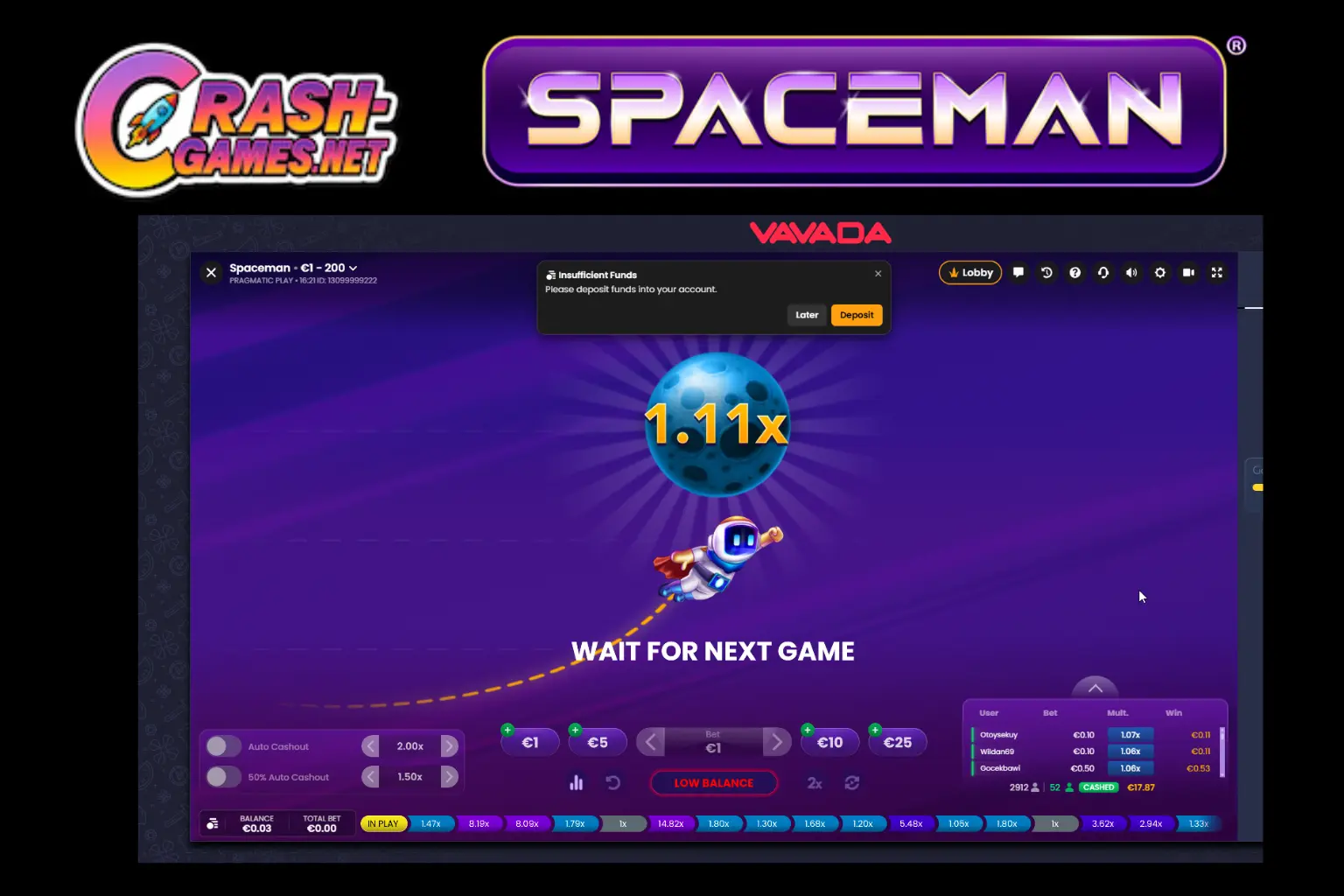
Spaceman is a crash game developed by Pragmatic Play. The concept is simple: you place a bet, a spaceman launches into the sky, and a multiplier climbs in real time starting from 1.00x. Your job is to hit the cashout button before the spaceman crashes back down. If you cash out in time, you win your bet multiplied by whatever number is on the screen. If you don’t, you lose your stake. That’s it.
What makes Spaceman different from other crash games like Aviator or JetX is one feature in particular: a built-in жартылай қолма-қол ақша алу button. This lets you secure half your bet mid-round while letting the other half ride. It’s a small mechanical difference, but it opens the door to layered strategies you can’t easily replicate in most other crash titles.
This guide walks through how the game works, how to approach your Spaceman strategy with discipline, and what traps to watch out for. None of this guarantees profit—crash games are random, and the house always holds a mathematical edge. But understanding how the game functions and managing your money wisely can make your sessions smarter and longer-lasting.
How the Timing-Based Crash Mechanic Works
Every round of Spaceman starts the same way. You place your bet during a short countdown window. Once the round begins, the spaceman launches and the multiplier starts climbing—1.10x, 1.30x, 1.75x, 2.40x, and so on.
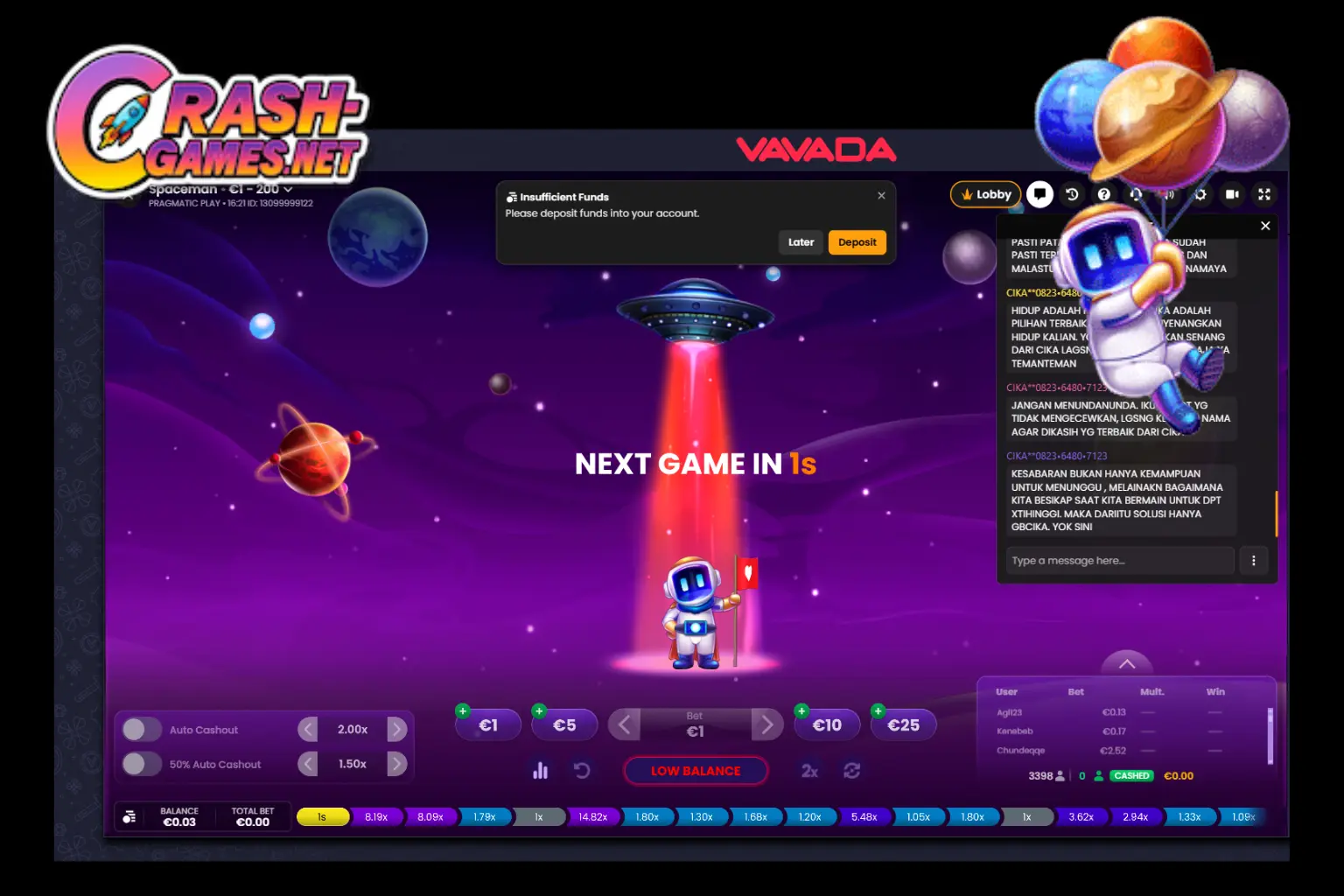
At some random point, the spaceman crashes. Visually, his red cape vanishes and he tumbles into a cluster of planet-shaped balloons. If you haven’t cashed out by then, your bet is gone. If you have, you keep whatever multiplier you locked in.
The crash point is determined randomly each round. It could crash at 1.02x. It could soar past 50x. There is no pattern, no cycle, and no way to predict when it will happen.
At the bottom of the screen, you’ll typically see a payout history showing the last 20 or so crash points. Some players study these for trends. It’s fine to glance at them for a general feel, but don’t fall into the trap of thinking past results influence future ones. They don’t. Each round is independent.
Here’s a scenario to picture: You set auto-cashout at 2.0x. The round starts, the multiplier climbs to 1.95x, and then the spaceman crashes. You lose your bet—even though you were just a hair away. That near-miss stings, but it’s a core part of how crash games work. The randomness doesn’t care about your target.
Partial Cashout: What It Is and When to Use It
Most crash games give you a single choice: cash out or don’t. Spaceman adds a middle option. Right next to the full Cashout button, there’s a 50% Cashout button. Tap it during a round, and you lock in half your current winnings. The other half of your bet stays live, still climbing with the multiplier.
You can also automate this. Before a round starts, you can set a 50% Auto Cashout slider to trigger at a specific multiplier—say, 2.0x—while separately setting a full auto-cashout at a higher target.
When Partial Cashout Makes Sense
Partial cashout works well when you want to play aggressively without going all-in on risk. For example, you could secure half your position at 2.5x and then let the remaining half aim for 5x or higher. If the round crashes at 3.8x, you’ve still banked something.
When Full Cashout Is Better
If you’re playing conservatively—targeting low, frequent wins—full cashout is usually cleaner. It removes the temptation to keep riding with that second half. And on sessions where you’ve noticed several early crashes in a row, locking in everything at a modest multiplier can feel a lot more sensible.
The key thing to remember: partial cashout is a tool, not a safety net. It doesn’t reduce the house edge or change the odds. It just changes how you divide your exposure within a single round.
Бұл ойыншыларға нені білдіреді
The partial cashout mechanic gives Spaceman players more flexibility than most crash games offer. But flexibility is only useful if it’s paired with a plan. Without one, partial cashout often becomes a way to justify staying in rounds too long. Having two cashout options means nothing if you’re making emotional decisions with both of them.
What it really means: Spaceman rewards players who define their approach before the round starts and stick to it. Whether you use partial cashout or not, pre-set discipline is more valuable than mid-round instincts.
Auto-Cashout Targets: Conservative vs. Aggressive
Setting an auto-cashout target before the round begins is one of the simplest ways to remove emotion from the equation. The multiplier you choose depends on how you want to play.
Conservative Approach: 1.5x–2.0x
Set your full auto-cashout somewhere between 1.5x and 2.0x. At these levels, you’ll often land successful cashouts because a large number of rounds reach at least 1.5x before crashing. The wins are small individually, but they add up during a session.
This approach suits players who prefer steady, low-drama sessions. You won’t see big spikes, but you also won’t see your bankroll vanish in five rounds.
Aggressive Approach: 3.0x–5.0x (with Partial Hedge)
If you’re chasing bigger payouts, consider setting a 50% auto-cashout at 2.0x and then manually aiming for 3.0x–5.0x with the remaining half. This hedges your risk: even if the round crashes before your higher target, you’ve banked something.
The trade-off is clear. Higher multiplier targets mean fewer successful cashouts. You’ll hit more losing rounds, which demands a larger bankroll buffer and genuine emotional patience.
Keep in mind: the RTP of Spaceman is often cited around 96.5%. Your target doesn’t change the house edge—it only shifts how frequently you win and how much each win is worth.
Екі ставкалы бөліну тәсілі
Spaceman’s interface typically lets you place two simultaneous bets in a single round. This opens up a split strategy:
- Bet 1 (Conservative): 60% of your round budget, auto-cashout at 1.5x–2.0x.
- Bet 2 (Aggressive): 40% of your round budget, manual or partial cashout aimed at 5x or higher.
The idea is that Bet 1 grinds out small, regular returns to offset losses, while Bet 2 swings for a bigger win. If the round crashes early, you lose both—but the weighted split limits damage. If the round runs high, Bet 2 delivers a meaningful payout while Bet 1 already banked a small gain.
This isn’t a magic formula. It’s a way to structure your play so that you’re not putting all your risk into a single decision every round.
Bankroll Management for High-Volatility Rounds
Spaceman can be volatile. The maximum multiplier can reach up to 5,000x, but plenty of rounds crash below 2x—sometimes below 1.1x. That variance demands strict money management.
Here’s a practical framework:
- Bet size: Risk 1–2% of your total session bankroll per bet. If you have $100 set aside, that’s $1–$2 per round.
- Стоп-лосс: Decide in advance how much you’re willing to lose in a session. A common rule is 20% of your bankroll. Hit that, and you walk away.
- Тоқтап-жеңіс: Similarly, set a win target. If you’re up 30–50% from where you started, consider stopping. Wins have a way of disappearing when you push past your plan.
- Streak cap: If you raise your bets after wins, cap the escalation at three to five rounds. Then reset to your base bet.
- Tilt check: If you’ve lost five to ten rounds in a row and feel your chest tightening, close the game. Seriously. Take a break.
These aren’t advanced tricks. They’re basic discipline. And they’re the single biggest factor separating players who enjoy crash games long-term from players who drain their wallets in one bad afternoon.
Жиі кездесетін қателіктерді болдырмау
1. Treating Partial Cashout as a Safety Net
This is the biggest Spaceman-specific trap. Players start using partial cashout every round, thinking it protects them. But what actually happens is they lock in half at a low multiplier and then lose the other half to a crash more often than not. Over many rounds, this pattern quietly eats into their bankroll. Use partial cashout deliberately, not habitually.
2. Chasing Losses with Bigger Bets
You lose three rounds in a row and decide to double your next bet “to get it back.” This is the fastest way to blow through a bankroll. The crash point doesn’t know or care about your previous results. Each round is fresh.
3. Overriding Your Auto-Cashout
You set auto-cashout at 2.0x. The round starts climbing past 1.8x, and the excitement kicks in. You cancel the auto setting, thinking this round is going higher. The spaceman crashes at 2.1x—right after you would have cashed out. Or worse, it crashes at 1.9x and you get nothing. If you set a target, trust it.
4. Playing Without a Stop-Loss
No stop-loss means no floor beneath your session. Crash games move fast—rounds last seconds. Without a hard limit, you can cycle through dozens of bets in minutes without realizing how deep you’ve gone.
5. Жуық апаттан кейін қисайту
Imagine this: you’re playing manually, aiming for 3.0x. The multiplier hits 2.97x and crashes. You feel robbed. So you immediately bet bigger on the next round to “make up for it.” That’s tilt. Recognize it. Step away when it happens.
Демо режимінде жаттығу тапсырмалары
Many operators that carry Spaceman offer a free demo mode. Use it. Seriously. Demo play costs nothing and lets you test your Spaceman strategy under realistic conditions—minus the financial pressure.
Drill 1: The 1.5x Grind
Set full auto-cashout at 1.5x. Play 100 rounds. Track how many times you successfully cash out. You’re aiming for consistency and getting comfortable with the pace.
Drill 2: The 2.0x Partial Split
Set 50% auto-cashout at 2.0x. Manually handle the remaining half—try to reach 4x or higher before cashing out. After 100 rounds, compare how much the secured halves earned versus how much the manual halves lost. This teaches you the real cost of holding too long.
Drill 3: The Two-Bet 3.0x Test
Place two bets: one with auto-cashout at 1.5x, one aiming for 3.0x. Run 100 rounds. Log your win rate on each bet. Adjust the split (60/40, 70/30) and see how it changes your outcomes.
These drills won’t predict real-money results, but they build muscle memory for setting targets and sticking to them. When you transition to real play, look for no-deposit bonuses or free bet offers at crypto crash casinos—though always read the bonus terms first, because wagering requirements and game restrictions vary by operator.
Spaceman vs. JetX vs. Aviator: Quick Comparison
All three are crash games with a rising multiplier and a random crash point. But they differ in meaningful ways.
Spaceman stands out with its 50% partial cashout feature, which neither JetX nor Aviator offers natively. The max multiplier caps at 5,000x.
JetX by SmartSoft Gaming is more speed-focused, with a jet plane theme and generally full/manual cashout only. Max multipliers can vary by operator but often reach around 10,000x.
Aviator by Spribe features a social element—you can see other players’ bets and cashouts in real time, which adds a psychological layer. It supports a double-bet system similar to Spaceman’s, and theoretically has no hard multiplier cap, though extreme multipliers are exceedingly rare.
All three use provably fair verification at many sites, which lets you independently confirm that round outcomes weren’t manipulated. If a casino doesn’t offer provably fair tools, that’s worth noting before you deposit.
The choice between them often comes down to personal preference. If you like the idea of partial cashout as a strategic lever, Spaceman is the natural fit.
Practical Checklist Before Every Session
- Set your session bankroll. Only use money you’ve already decided you can afford to lose.
- Define your bet size. Stick to 1–2% of your session bankroll per round.
- Choose your cashout targets. Decide whether you’re playing conservative (1.5x–2.0x) or aggressive (3.0x–5.0x with partial hedge) before you start.
- Стоп-лосс орнатыңыз. Write it down or type it in your phone. When you hit it, you’re done for the session.
- Set a stop-win. Same idea. Lock in a good session instead of giving it all back.
- Автоматты ақша шығаруды пайдаланыңыз. Don’t rely on your reflexes or emotions to make the call mid-round.
- Check bonus terms. If you’re using a deposit bonus, confirm that Spaceman counts toward wagering requirements at your specific operator. This varies widely.
- Start with demo. If it’s your first time or you’re testing a new approach, run at least 30–50 demo rounds first.
Жиі қойылатын сұрақтар
Is there a way to predict when Spaceman will crash?
No. Each round’s crash point is determined randomly. Payout histories can be interesting to look at, but past rounds do not influence future ones. Avoid any app or tool that claims to predict crash points—they don’t work.
Әр раунд сайын жартылай ақша шығаруды қолданғаным дұрыс па?
Not necessarily. Partial cashout is useful when you have a clear plan—for example, locking in half at 2x while targeting a higher multiplier with the rest. Using it every round without a reason can slowly erode your bankroll because you’re still fully exposed with half your bet.
What’s the best auto-cashout target for beginners?
Many players start with 1.5x as a comfortable introduction. It lands often enough to keep sessions alive and gives you time to learn the game’s rhythm without major losses. Once you’re comfortable, you can experiment with higher targets or split strategies.
Can I play Spaceman with crypto?
Yes, at many crypto crash casinos. Availability depends on the operator, so check the specific site’s game library. Bonus terms and supported cryptocurrencies also vary.
Does Spaceman strategy actually work?
No strategy changes the underlying house edge or guarantees profit. What a good strategy does is help you manage your bankroll, set clear rules, and avoid impulsive decisions. Over time, disciplined play tends to produce longer, more enjoyable sessions than random betting—but the house edge remains.
Жауапты ойын туралы еске салу
Crash games are high-volatility and outcomes are random. Set session limits, use stop-loss rules, and never bet more than you can afford to lose. Spaceman is entertainment, not income. If gambling stops being fun, reach out to a responsible gambling organization for support.
Bonus terms and game availability vary by operator. Always verify the rules at whatever casino you choose to play.
Қорытынды ойлар
Spaceman gives you more tools than most crash games—partial cashout, dual bet slots, and adjustable auto-cashout sliders. But tools only help when paired with a plan. Define your targets before each session, respect your stop-loss, and treat the partial cashout as a tactical choice rather than a default habit.
No Spaceman strategy will beat the house edge over time. The math doesn’t work that way. What a thoughtful approach can do is help you play smarter, lose less to emotional decisions, and keep the experience enjoyable for longer.
Крэш-ойындарға арналған стратегияларды зерттеп, сенімді казиноларды табыңыз. Crash-Games.net.
 English
  Português do Brasil
  Español
  Türkçe
  हिन्दी
  Русский
  Polski
  Bahasa Indonesia
  Tiếng Việt
  العربية
  Қазақ тілі
  Deutsch
  Français
  Latviešu valoda